
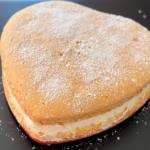
Sponge Cake with Pineapple Mousse / Biszkopt z Musem Ananasowym
Delicate, light as air, fluffy, springy cake that melts in your mouth. Perfect for layered cakes or just to have with morning coffee. The foamy structure of the eggs allows the cake to rise without baking powder or baking soda. The airy texture of sponge cake absorbs liquid, which makes perfect deserts like mousse filled cakes.
Servings: 12 Servings
Calories: 294kcal
Ingredients
- 5 eggs (separate whites and yolks)
- 120 grams all-purpose flour (sifted)
- 40 grams potato flour (sifted)
- 165 grams granulated sugar
Pineapple Mousse Filling
- 25 oz. can crushed pineapple drained
- 1 box small instant vanilla pudding
- 2 cups heavy whipping cream
Instructions
- First, combine a small box of instant vanilla pudding with heavy cream (instead of the milk that the recipe on the pudding box calls for.)
- Mix with a hand mixer. The mixture will very soon become thick and fluffy. If it seems too thick, you can add a small amount more heavy cream until you reach the desired consistency. (It should be thick but not a stiff consistency.)
- Next, fold in your drained, crushed pineapple until you reach a spreadable consistency.
Sponge Cake Instructions
- Preheat the oven to 170º C. Line the bottom of the cake tin with baking paper, do not grease the sides. Sift the wheat and potato flour through a sieve - combine them and set aside.
- Separate the whites very carefully from the yolks.
- Beat the whites to a stiff, fluffy foam. Tip: the bowl in which you will whip the egg whites must be dry. Even a drop of water can prevent the egg whites from whipping properly.
- Slowly add sugar while mixing. Mix the egg whites with the sugar until the foam does not fall out when you turn the bowl over.
- Then gradually add 1 egg yolk - mixing all the time.
- When you have a uniform fluffy mass, very slowly fold the previously sifted flours, but do not mix them, just fold them gently with a spatula so that the ingredients combine.
- Gently pour the batter into the spring form pan and smooth it out. Bake at 170ºC for about 35 - 40 minutes or until the so-called dry stick.
- Take the hot cake out of the oven and drop it (of course in a tin) on the floor or kitchen counter (you can spread a kitchen cloth to avoid damaging to the counter) from a height of about 30-40 cm. Leave the cake in the tin to cool at room temperature. Separate the sides of the sponge cake from the spring form pan with a knife only when the cake has cooled down.
- Sponge cake can be layered with your favorite creams and fruits at your discretion. It is also the perfect base for a cake. Enjoy!
Notes
| Nutrition Facts | |
|---|---|
| Serving size: Servings | |
| Servings: 12 | |
| Amount per serving | |
| Calories | 294 |
| % Daily Value* | |
| Total Fat 16.8g | 21% |
| Saturated Fat 9.8g | 49% |
| Cholesterol 123mg | 41% |
| Sodium 147mg | 6% |
| Total Carbohydrate 32.7g | 12% |
| Dietary Fiber 0.9g | 3% |
| Total Sugars 14.1g | |
| Protein 4.5g | |
| Vitamin D 27mcg | 136% |
| Calcium 42mg | 3% |
| Iron 1mg | 7% |
| Potassium 121mg | 3% |
| *The % Daily Value (DV) tells you how much a nutrient in a food serving contributes to a daily diet. 2,000 calorie per day is used for general nutrition advice. This recipe was calculated using the exact brands and measurements I used to make this recipe. If you are following a strict diet please note; changing anything will cause the nutritional information to change. My calculations are intended as a guide only. | |
Goes perfect with pineapple filling. Yum!
Yes, but also great with peach, nectarine, various berries etc… Thank you!